Stackable Bins vs Nesting Bins: Which Storage Solution Is Right for Your Business?
In industrial environments, choosing the right storage bin can significantly impact warehouse efficiency, storage capacity, material handling, and operational costs. Among the most commonly used solutions are stackable plastic bins and nesting bins. While both help organize inventory and streamline workflows, they serve different purposes depending on your storage requirements.
If you're planning to optimize warehouse space, improve picking efficiency, or reduce transportation costs, understanding the differences between these two bin types is essential.
What Are Stackable Bins?
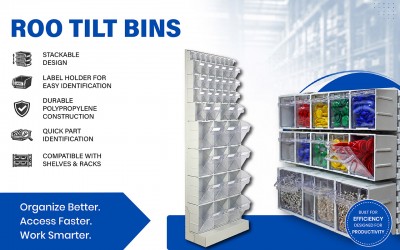
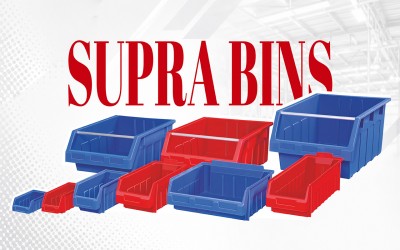
Stackable plastic bins are designed to be safely placed on top of one another when filled with products. Their reinforced structure allows businesses to maximize vertical storage space while maintaining easy access to inventory.
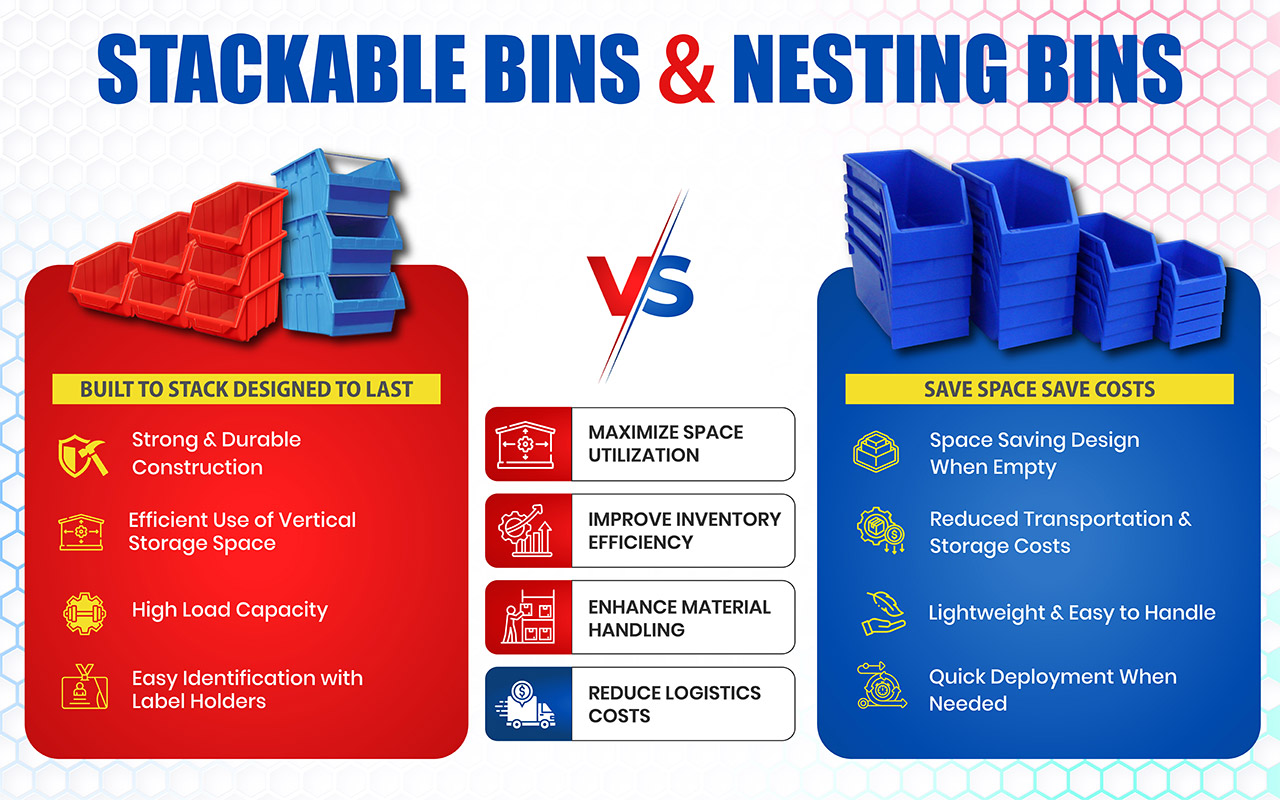
Key Features of Stackable Bins:
- Strong and durable construction
- Efficient use of vertical storage space
- Available in various sizes and capacities
- Suitable for shelving systems and racking
- Easy identification through label holders
- Resistant to moisture, chemicals, and corrosion
Common Applications:
- Manufacturing facilities
- Automotive component storage
- Warehousing and distribution centers
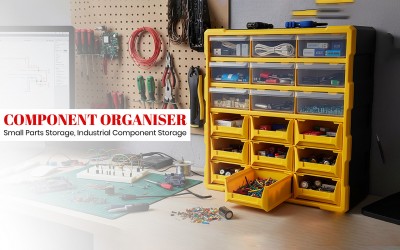
- Spare parts management
- Assembly line operations
What Are Nesting Bins?
Nesting bins are designed to fit inside one another when empty. This feature significantly reduces the amount of space required during return transport or when bins are not in use.
Key Features of Nesting Bins:
- Space-saving design when empty / not in use
- Reduced transportation and storage costs
- Lightweight and easy to handle
- Quick deployment when needed
- Available in multiple industrial grades
Common Applications:
- Retail backroom storage
- Reverse logistics operations
- Food processing industries
- Distribution centres
- Temporary inventory movement
Advantages of Stackable Plastic Bins
1. Better Space Utilization
2. Improved Inventory Organization
3. Higher Load Capacity
4. Enhanced Operational Efficiency
Advantages of Nesting Bins
1. Significant Space Savings
2. Lower Logistics Costs
3. Flexibility for Seasonal Operations
4. Easier Handling
Which Bin Type Should You Choose?
The right choice depends on your operational priorities.
Choose Stackable Plastic Bins If:
✅ You require permanent storage solutions.
✅ You need to maximize warehouse storage capacity.
✅ Your operations involve heavy-duty industrial components.
✅ Fast inventory access is critical.
Choose Nesting Bins If:
✅ Reducing return transport costs is important.
✅ You frequently store bins when not in use.
✅ Your storage needs vary throughout the year.
✅ Lightweight handling is a priority.
Can Businesses Use Both?
Absolutely.
Many organizations combine stackable and nesting bins to optimize different areas of their operations. For example:
- Stackable bins can be used in production areas and warehouses for inventory storage.
- Nesting bins can support transportation, returns management, and temporary storage applications.
This hybrid approach delivers the benefits of both systems while maximizing efficiency.
Final Thoughts
Selecting the right storage solution is about more than simply organizing products. It directly affects productivity, warehouse utilization, transportation efficiency, and operational costs.
If your focus is long-term storage, durability, and efficient warehouse organization, stackable plastic bins are the ideal choice. If your priority is saving space during transportation and minimizing empty storage requirements, nesting bins offer clear advantages.
Understanding the strengths of each solution allows businesses to make informed decisions that support sustainable growth and operational excellence.
Looking for the Right Industrial Storage Solution?
At Alkon Plastics Pvt. Ltd., we offer a wide range of industrial storage products designed to improve organization and material handling efficiency across industries.