Complete Guide To Industrial Plastic Bins For Efficient Material Handling
Introduction
In industrial environments, proper storage and material handling are essential for maintaining productivity, efficiency, and workplace organization. Whether it is a manufacturing plant, warehouse, logistics center, pharmaceutical unit, or automotive facility, improper storage can lead to clutter, damaged materials, wasted space, and delays in operations.
Managing components, spare parts, tools, and inventory systematically is a major challenge for industries. When materials are scattered or poorly organized, employees spend unnecessary time locating items, workflows slow down, and productivity decreases.
This is where material handling bins play an important role.
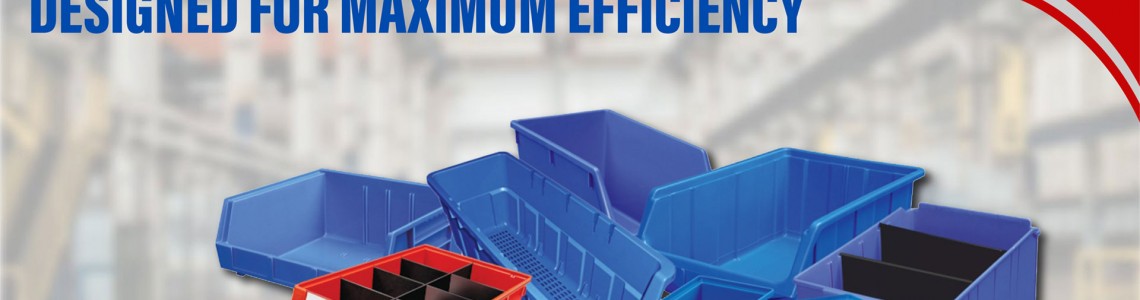
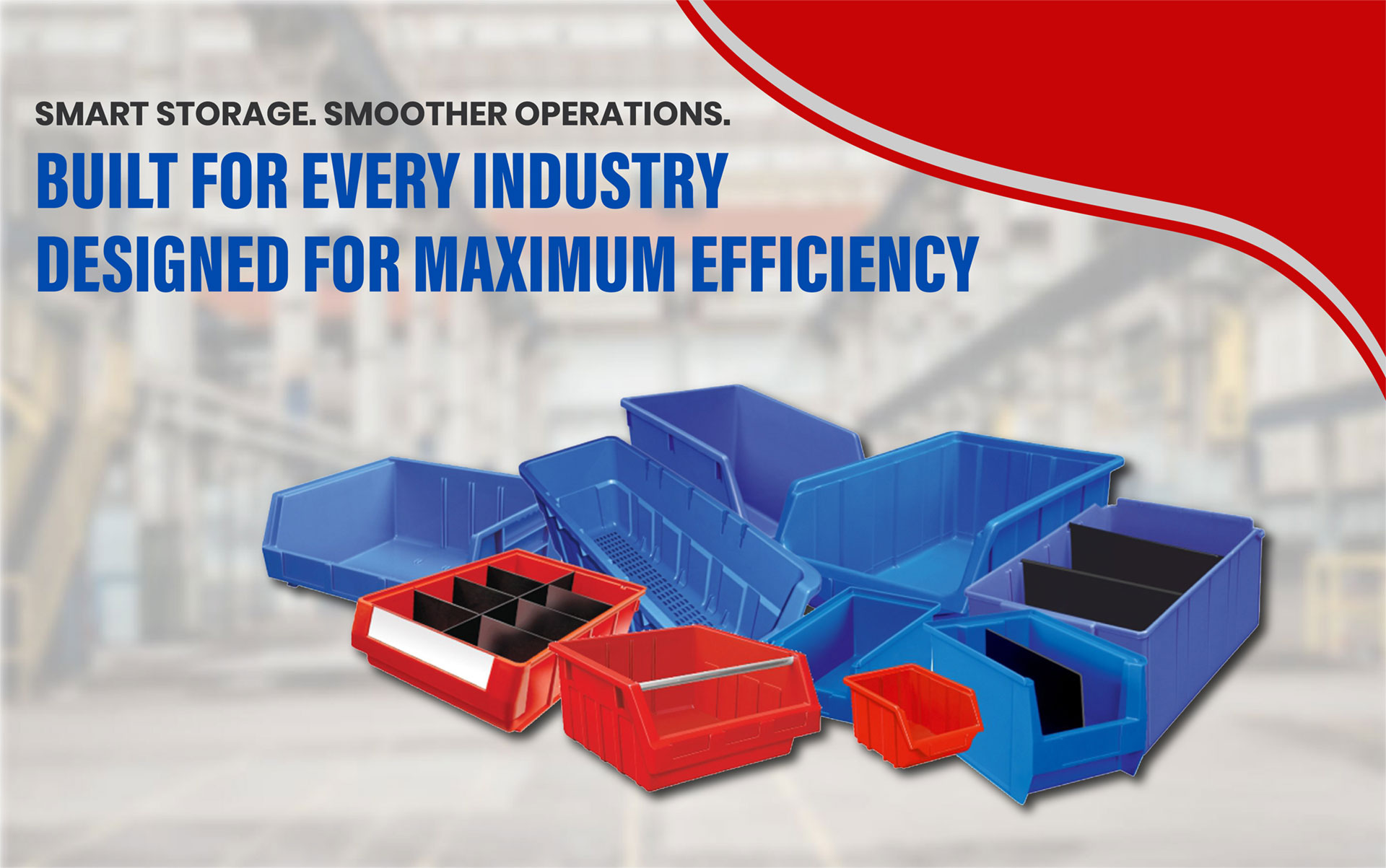
Industrial plastic bins are designed to help businesses organize, store, and manage materials efficiently. These bins improve accessibility, maximize available space, and create a structured storage system for smooth day-to-day operations.
In this guide, we will explore everything you need to know about industrial plastic bins, including their types, benefits, applications, and how to choose the right storage solution for your business.
What Are Material Handling Bins?
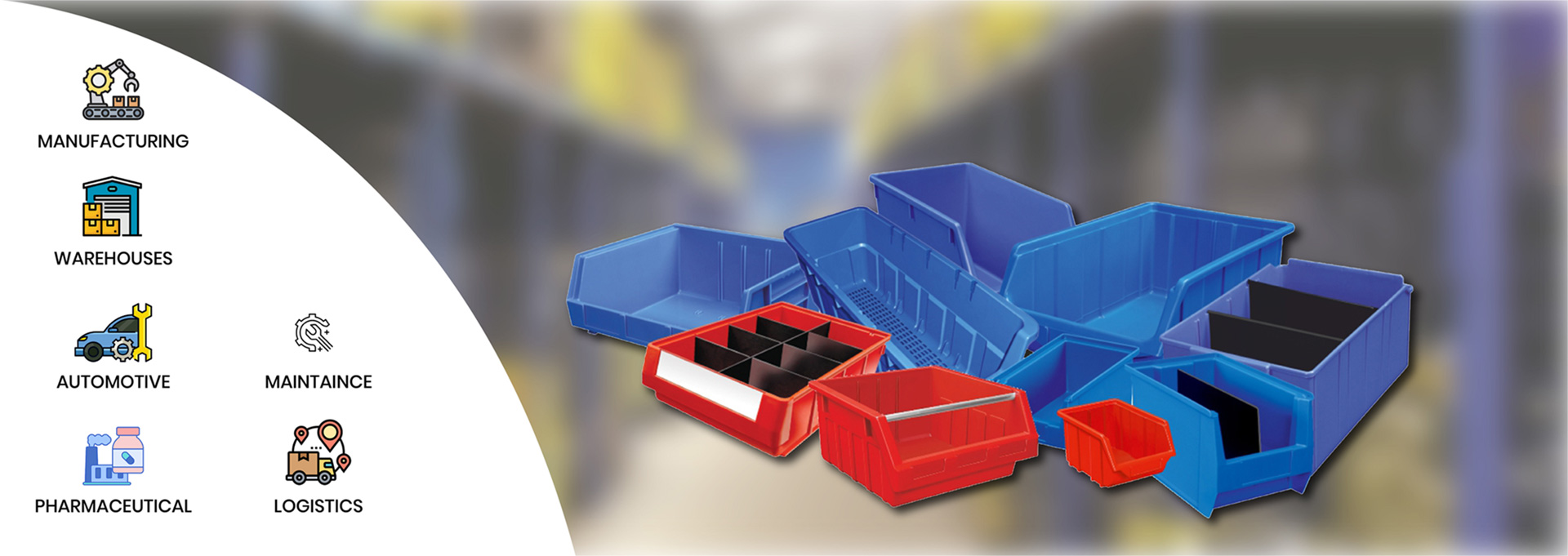
Material handling bins are specially designed storage containers used for organizing, storing, transporting, and managing industrial components and materials.
These bins are commonly used in:
- Warehouses
- Manufacturing units
- Production floors
- Pharmaceutical industries
- Automotive sectors
- Engineering facilities
- Retail and logistics operations
Industrial plastic bins help businesses store components in a systematic manner, making them easy to identify, access, and manage.
Unlike traditional storage methods, industrial plastic bins provide durability, flexibility, and better organization for handling various materials in demanding environments.
These bins are generally made from durable polypropylene material, allowing them to withstand industrial usage while maintaining long-term performance.
Why Are Industrial Plastic Bins Important?
Efficient storage directly impacts productivity and operational efficiency.
Without proper organization, industries often face:
Cluttered Workspaces
Unorganized materials create confusion and reduce workplace efficiency.
Delayed Operations
Workers spend extra time searching for components and tools.
Wasted Storage Space
Poor stacking and storage systems lead to inefficient space utilization.
Material Damage
Improper storage increases the risk of product damage and inventory loss.
Inventory Mismanagement
Difficulties in tracking parts can affect workflow and productivity.
Industrial plastic bins solve these problems by providing a structured and organized storage solution.
Types Of Industrial Plastic Bins
There are different types of storage bins available depending on industrial requirements. Choosing the right bin depends on storage needs, component size, application, and load capacity.
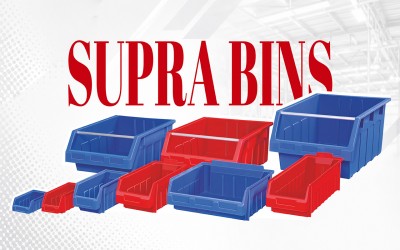
1. Supra Bins – Ideal For Organized Component Storage
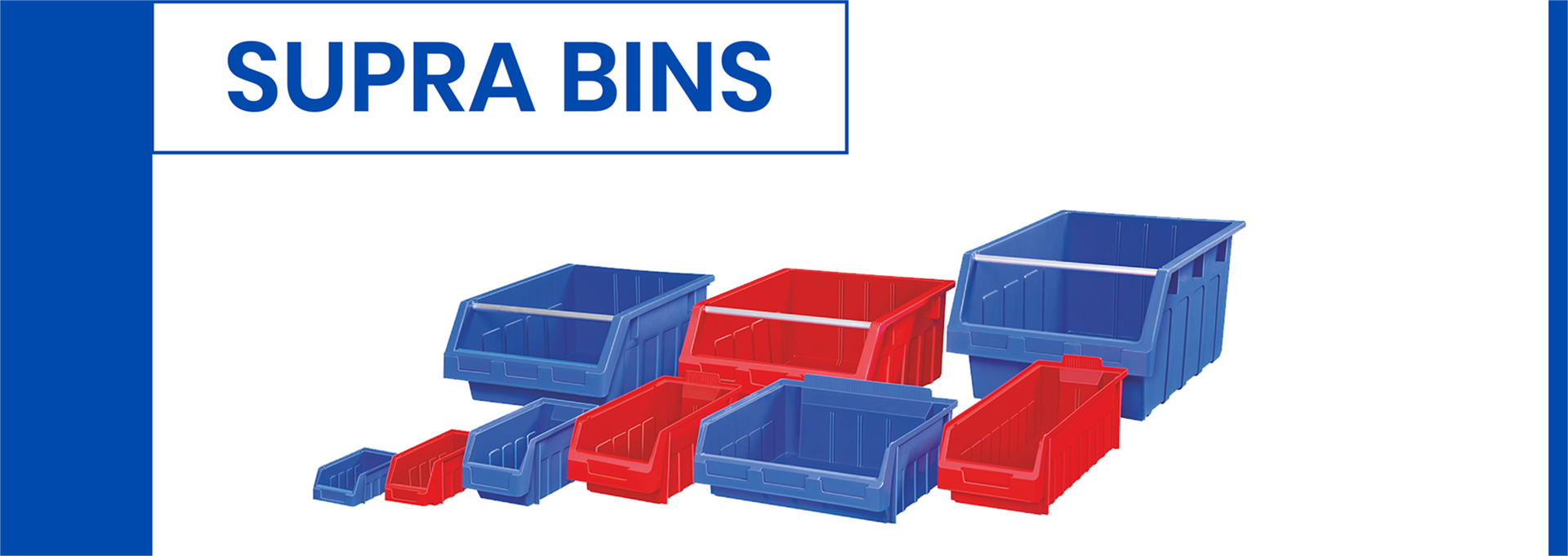
Supra Bins are commonly used for storing small to medium industrial components.
They are suitable for:
- Assembly lines
- Manufacturing facilities
- Spare parts storage
- Maintenance departments
- Electronic Manufacturing & Services
Key Features:
- Stackable design
- Identification card holders
- Easy accessibility
- Space-saving storage
- Durable construction
Supra Bins help maintain organized storage while maximizing vertical space.
2. Bull Bins – For Efficient Industrial Storage
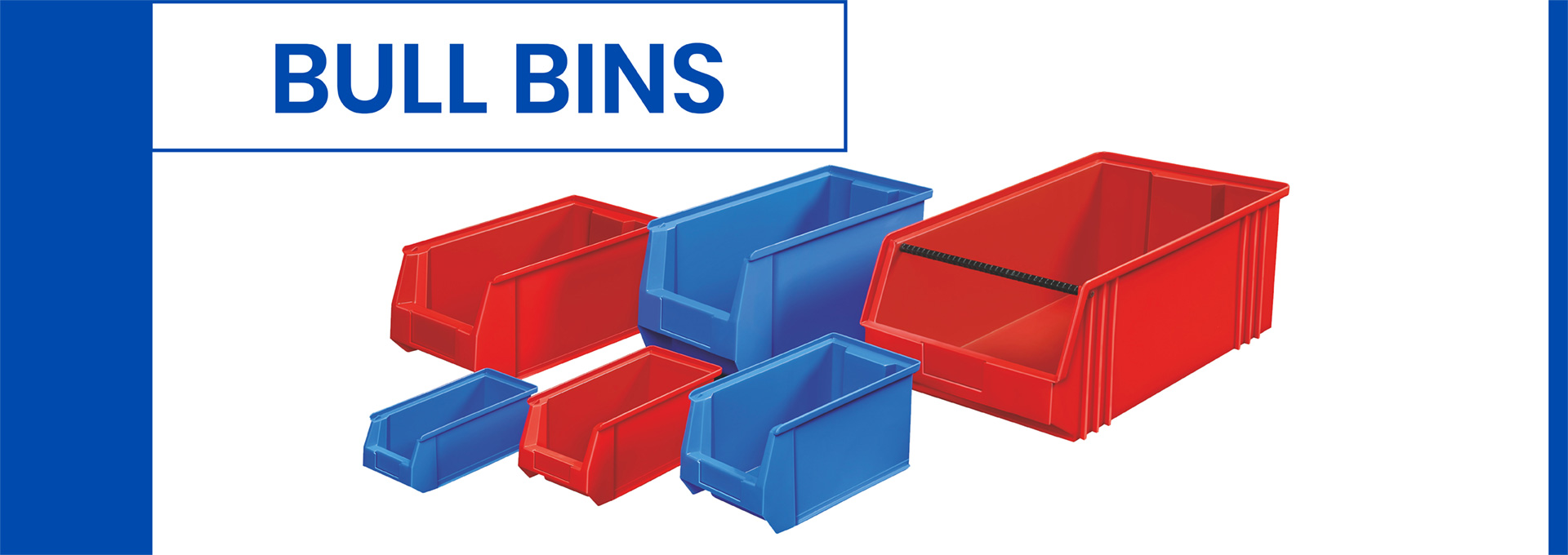
Bull Bins are designed for organized storage and quick accessibility.
These bins are suitable for:
- Warehouses
- Production floors
- Industrial storage systems
Key Features:
- Strong construction
- Stackable design
- Wide access opening
- Compatible with louvre panels
Bull Bins are useful where fast material access is required.
3. Rhino Bins – Heavy-Duty Performance
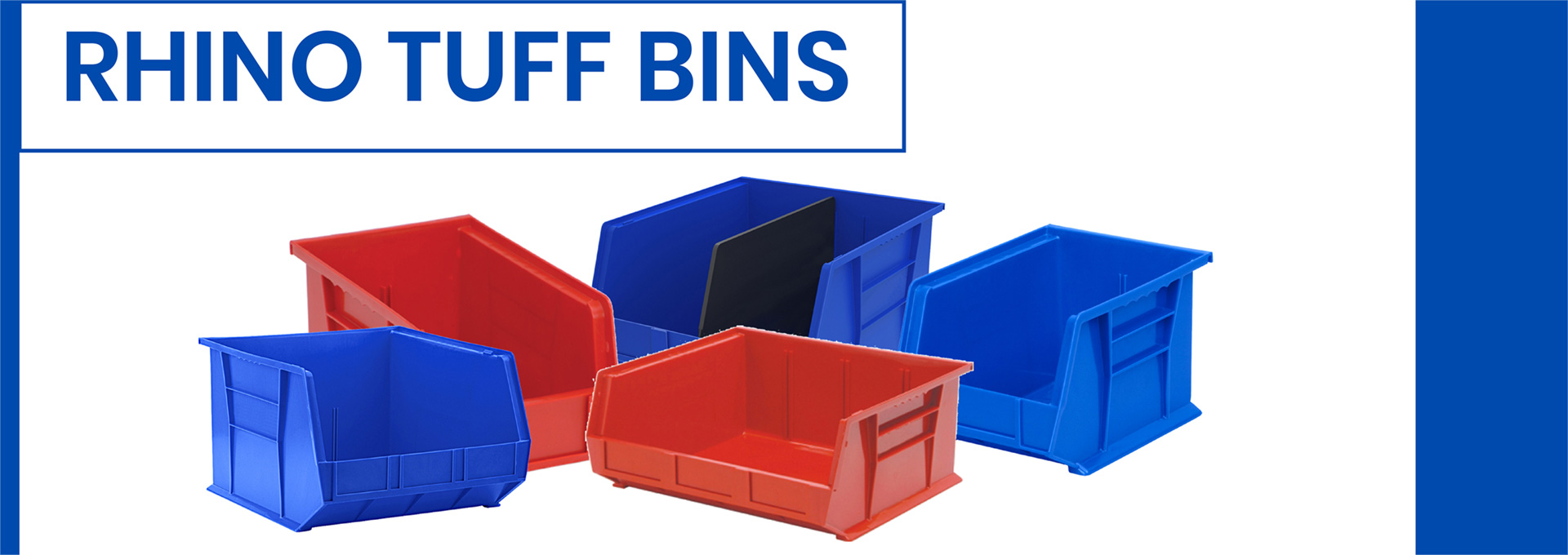
Rhino Bins are ideal for industries that require durable storage solutions for heavy materials.
Suitable industries include:
- Automotive
- Engineering
- Manufacturing
Key Features:
- High load-bearing capacity
- Durable design
- Long-lasting industrial use
- Efficient material handling
Rhino Bins are built to perform in demanding industrial environments.
4. Mammoth Bins – Large Capacity Storage
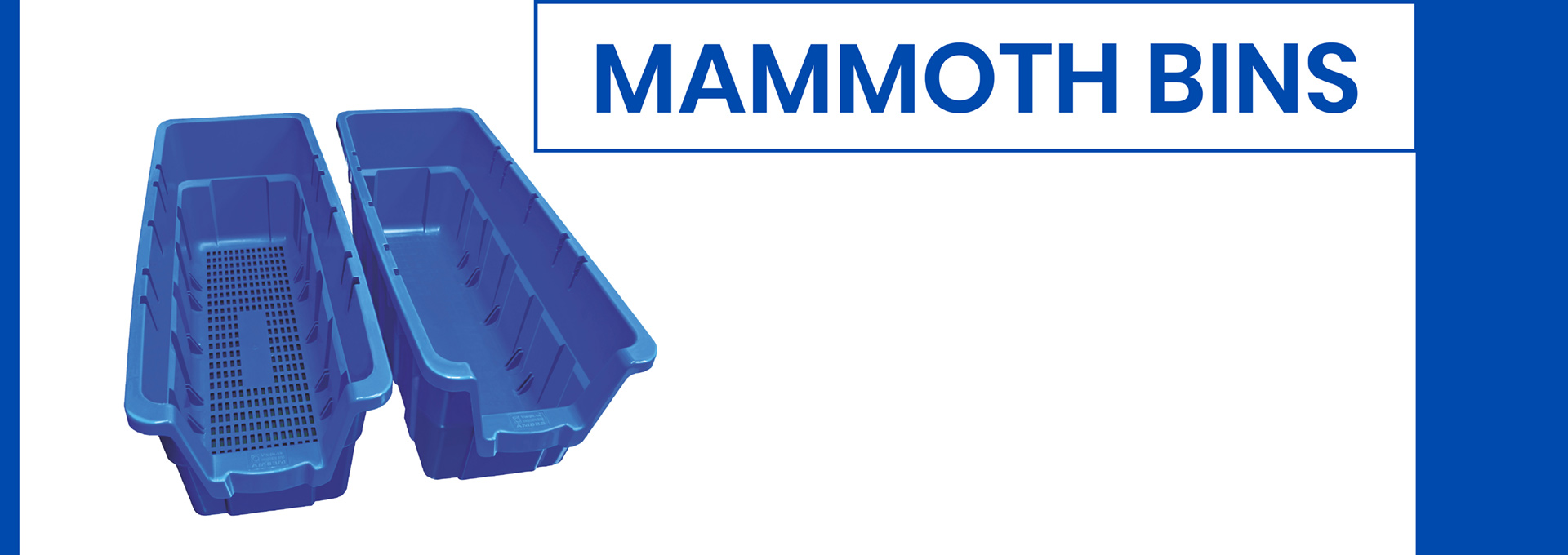
Mammoth Bins are designed for storing larger items and bulk materials.
These warehouse bins are suitable for:
- Large warehouses
- Logistics centers
- Industrial racking systems
Key Features:
- Large storage capacity
- Deep storage access
- Suitable for heavy-duty shelving
- Available in solid and mesh base variants
Mammoth Bins help optimize warehouse organization and improve inventory handling.
5. Hippo Bins – Smart Storage For Organized Workspaces
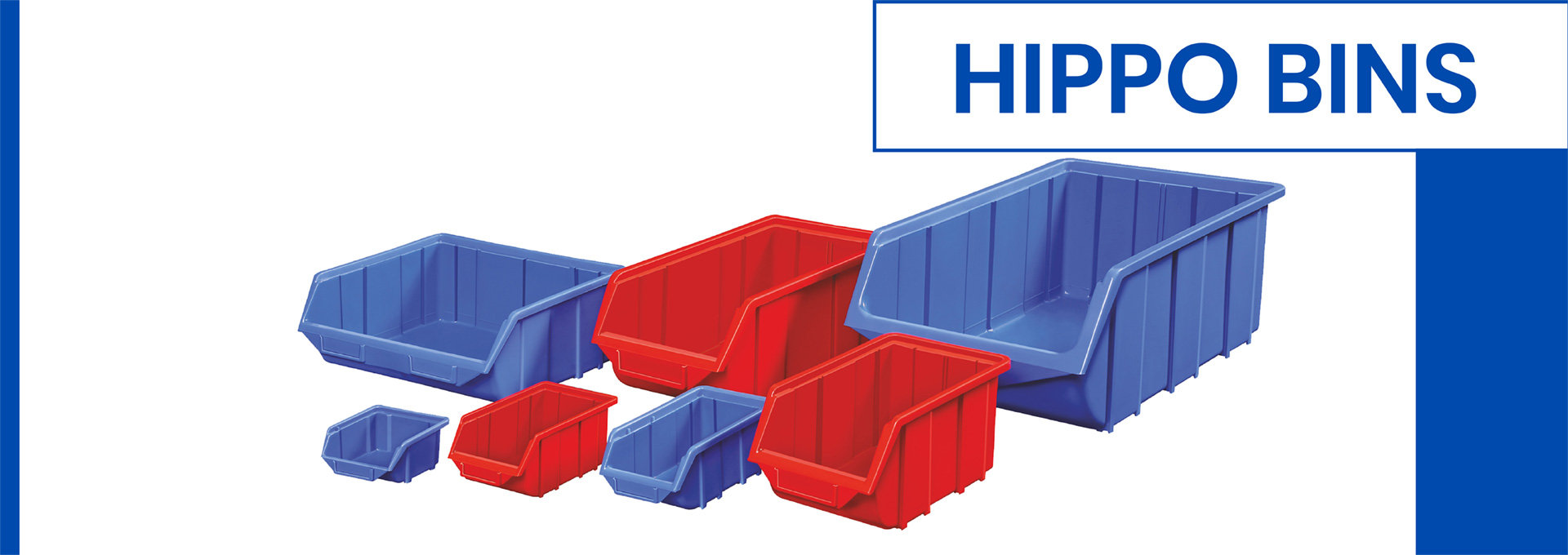
Hippo Bins are designed to help industries maintain systematic storage and quick accessibility for components and materials.
These bins are suitable for:
- Manufacturing facilities
- Assembly workstations
- Maintenance departments
- Production areas
Key Features:
- Durable industrial-grade construction
- Efficient organization of components
- Easy accessibility
- Suitable for workstation storage
Hippo Bins help improve workplace organization while supporting faster material handling during daily operations.
6. Koala Pick Bin Shelving System – Organized High-Density Storage
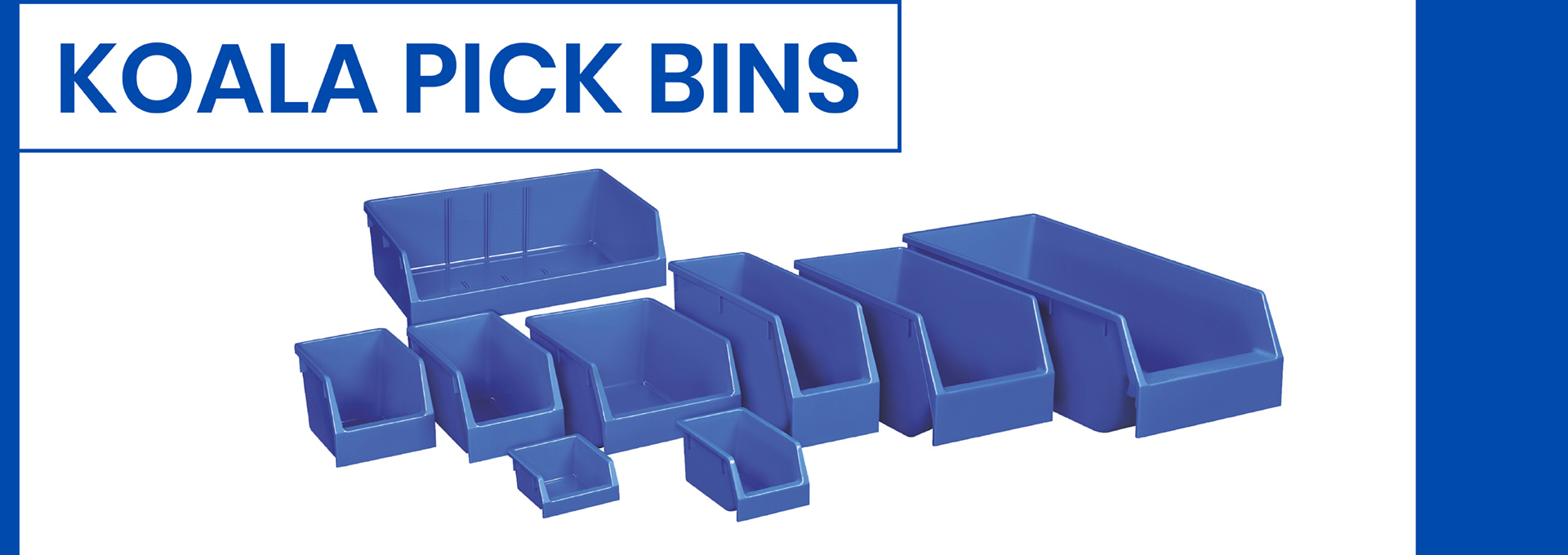
Koala Pick Bin Shelving Systems are designed for structured and space-efficient storage in industrial and warehouse environments.
These systems are ideal for:
- Warehouses
- Spare parts storage
- Inventory management
- Manufacturing facilities
Key Features:
- Space-saving shelving system
- Organized component storage
- Easy identification and accessibility
- Suitable for systematic inventory management
Koala Pick Bin Shelving Systems help industries optimize storage space while improving workflow efficiency and accessibility.
7. Tote Bins – Flexible Storage Solutions
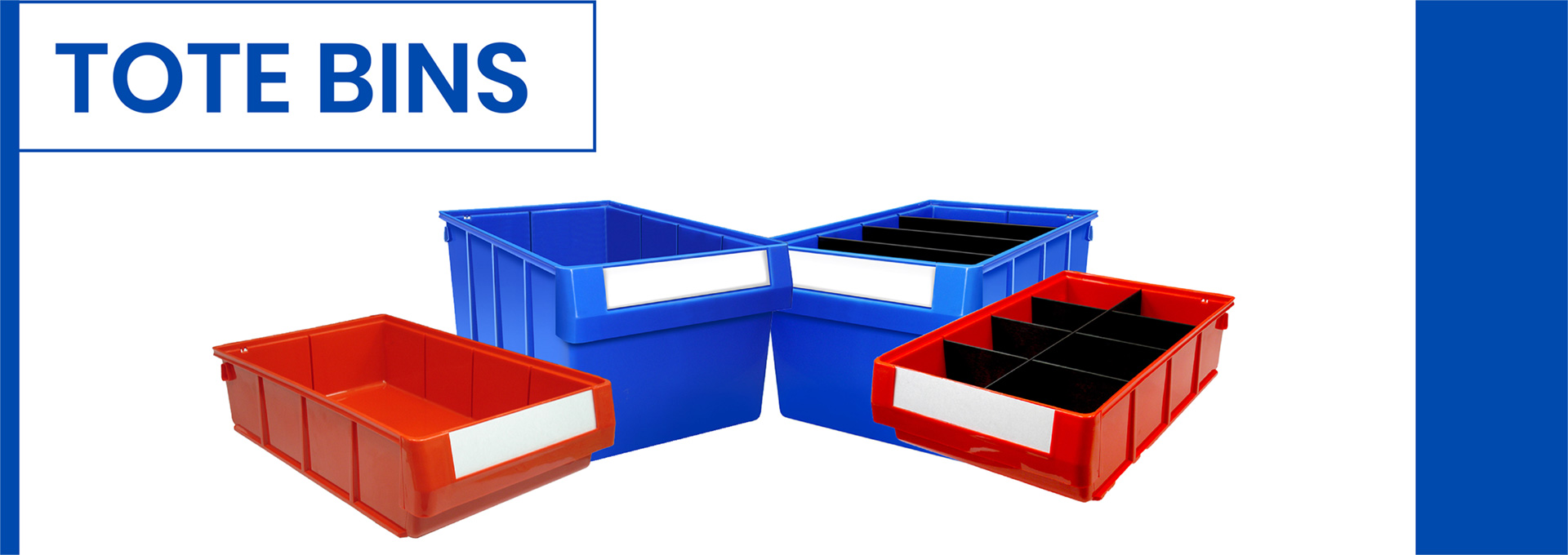
Tote Bins are widely used for storing multiple components efficiently.
Benefits:
- Easy categorization
- Better organization
- Improved accessibility
These bins are useful for organized material flow across industries.
8. ESD Safe Bins – Protection For Sensitive Components
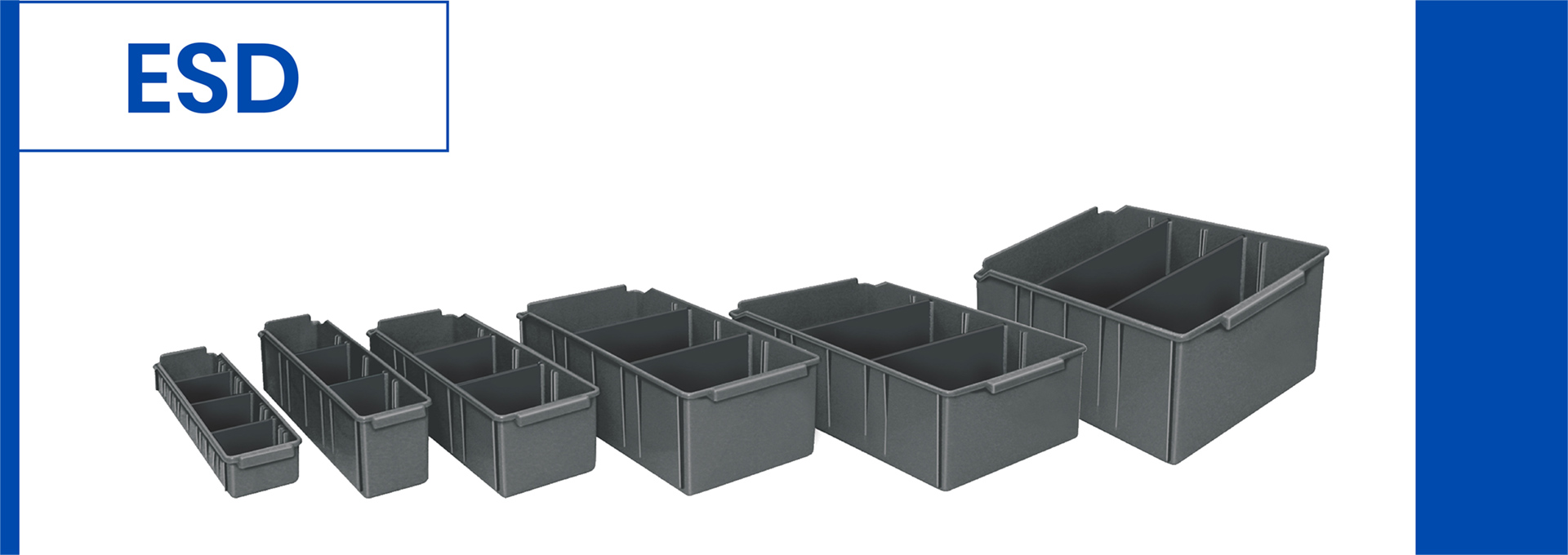
Industries handling electronic components often require anti-static storage solutions.
ESD Safe Bins are ideal for:
- Electronics industries
- Engineering applications
- Sensitive component storage
These bins help protect products from electrostatic discharge.
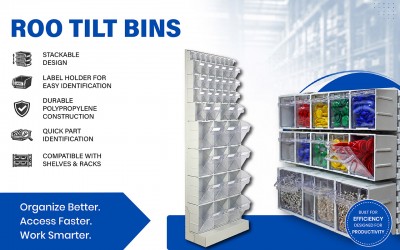
9. Roo Tilt Bins – Convenient Visibility & Access
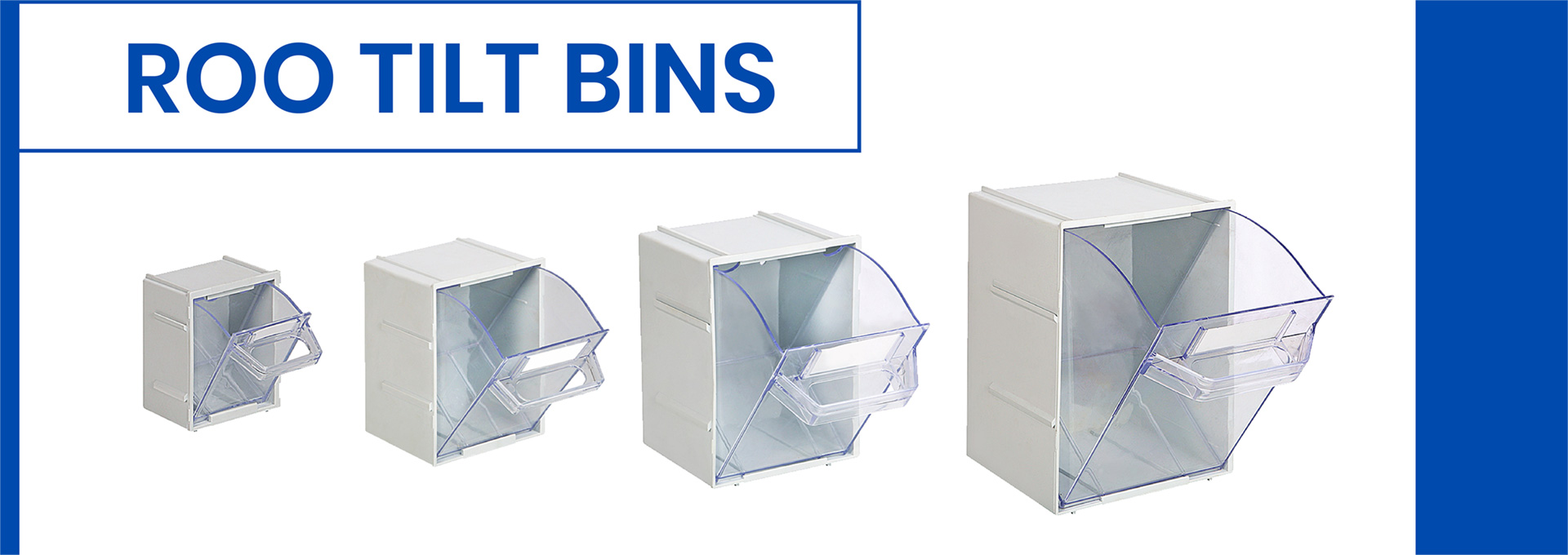
Roo Tilt Bins are designed for quick identification and easy retrieval of stored components.
They are suitable for:
- Workstations
- Maintenance departments
- Assembly areas
Their transparent front access improves visibility and convenience.
Benefits Of Using Industrial Plastic Bins
Using industrial plastic bins offers several advantages for businesses.
1. Better OrganizationMaterial handling bins help keep workplaces systematic and clutter-free.
Components can be categorized and stored efficiently, making retrieval easier.
2. Improved ProductivityWhen items are organized properly, employees spend less time searching for materials.
This helps improve workflow efficiency and saves operational time.
| Open-front access | for single-hand picking without removing the bin from the shelf — critical when a picker is doing hundreds of picks per shift. |
| Label holder slot | on the front face for barcode labels compatible with WMS scanning. Two-scan pick confirmation (bin location + item barcode) eliminates the most common picking error. |
| PPCP construction | for the daily physical abuse of warehouse handling — drops, impacts, heavy loads, cleaning with industrial agents. |
| Size range breadth | covering small components through to large packaged goods on a single standardised system — no mixed bin types causing training confusion. |
| Stackability when empty | for storage during rearrangements without requiring extra floor space. |
| Compatibility with standard shelving | to deploy immediately on existing infrastructure without new capital investment. |
Industries That Use Material Handling Bins
Material handling bins are widely used across industries.
Automotive Industry
For storing spare parts, nuts, bolts, and components.
Pharmaceutical Industry
For systematic storage and organized workflows.
Warehousing & Logistics
For inventory management and warehouse organization.
Manufacturing Industry
For efficient production line storage.
Electronics & Engineering
For protecting and organizing sensitive components.
FMCG Industry
For managing stock and material flow.
Aerospace Industry
For precise organization and handling of parts.
Gems & Jewellery
For safe organization of small valuable components.
How to Choose the Right Industrial Plastic Bin
Choosing the wrong bin is expensive. Bins that are too small cause overflow and disorganisation. Bins made from the wrong material crack or warp. Bins without the right mounting system sit loose on shelves and fall. The following framework prevents these mistakes
1 Define what you are storingSize, weight, and fragility of the item. A 5g electronic component needs a different bin from a 2kg automotive part. Maximum item dimensions determine the minimum bin inside dimensions — always check inside dimensions, not outside.
2 Determine your access patternHow often is this bin accessed? By hand or by automated system? One-hand pick or two hand? Front access or top access? High-frequency pick bins need open-front or tilt access. Occasional-access items can use closed tote bins. Automated systems need specific dimensional compatibility
3 Assess your environmentTemperature extremes? Chemical exposure? Dust levels? Static sensitivity? Pharmaceutical hygiene requirements? Each condition narrows the material and type selection. PPCP for chemical environments, ESD-safe for electronics, enclosed tilt bins for pharmaceutical dust protection
4 Choose your mounting or shelving systemWall space? Use louvre panels or direct wall mounting. Floor space available? Use free standing shelving frames or stands. Need mobility? Use trolley systems. Already have shelving? Confirm compatibility — Alkon bins are compatible with most standard Indian shelving systems
5 Calculate total cost of ownership — not just unit priceA cheap bin that lasts 6 months and needs replacing three times costs more over 2 years than a quality PPCP bin that lasts 10+. Factor in replacement frequency, picking-error costs from poor visibility, and labour time differences between bin types when comparing options.
"The cheapest bin is never the cheapest storage solution. When you count replacement cycles, picking errors, and labour minutes per pick — quality pays back within the first year."
Why Choose Alkon Plastics For Material Handling Bins?
For industries looking for reliable storage solutions, Alkon Plastics offers a wide range of industrial storage and material handling products designed for efficiency and durability.
Why Industries Trust Alkon Plastics:
- ✔ Established In 1982
- ✔ 42+ Years Of Industry Expertise
- ✔ Government Recognized Export House
- ✔ Reusable & Recyclable Products
- ✔ Wide Range Of Industrial Storage Solutions
- ✔ Trusted Across Multiple Industries Worldwide
At Alkon Plastics, we focus on helping industries improve storage efficiency, organization, and productivity with durable and reliable solutions.
Frequently Asked Questions (FAQs)
1. What Are Material Handling Bins Used For?Material handling bins are used for storing, organizing, and managing industrial components, tools, spare parts, and materials efficiently.
2. Which Industries Use Industrial Plastic Bins?Industries such as automotive, pharma, manufacturing, logistics, engineering, FMCG, aerospace, and electronics use industrial plastic bins.
3. Why Are Stackable Storage Bins Important?Stackable bins help maximize vertical storage space and improve warehouse organization.
4. Are Plastic Storage Bins Durable?Yes, industrial plastic bins are designed for heavy industrial usage and long-term durability.
5. How Do I Choose The Right Warehouse Bin?Choose based on material type, load capacity, storage size, accessibility, and industrial application.
Conclusion
Efficient storage is one of the most important factors in improving industrial productivity and operational efficiency. Proper organization helps reduce clutter, save time, optimize space, and streamline workflows.
Whether you need storage for small components, warehouse inventory, heavy-duty materials, or sensitive electronic parts, choosing the right material handling bins can significantly improve workplace organization.
At Alkon Plastics, we offer a wide range of industrial plastic bins designed to support efficient storage, material handling, and productivity across industries.
Looking for reliable industrial storage solutions? Explore Alkon Plastics’ range of material handling bins and optimize your storage systems today.