Color-Coding Warehouse Bins: The Complete System Implementation Guide
Introduction
In today's fast-paced warehousing and manufacturing environments, efficiency depends heavily on how quickly employees can identify, locate, and retrieve inventory.
Even with modern inventory systems, many facilities still struggle with misplaced items, picking errors, delayed order fulfillment, and inefficient workflows.
One of the simplest yet most effective solutions is implementing a color-coded warehouse bin system.
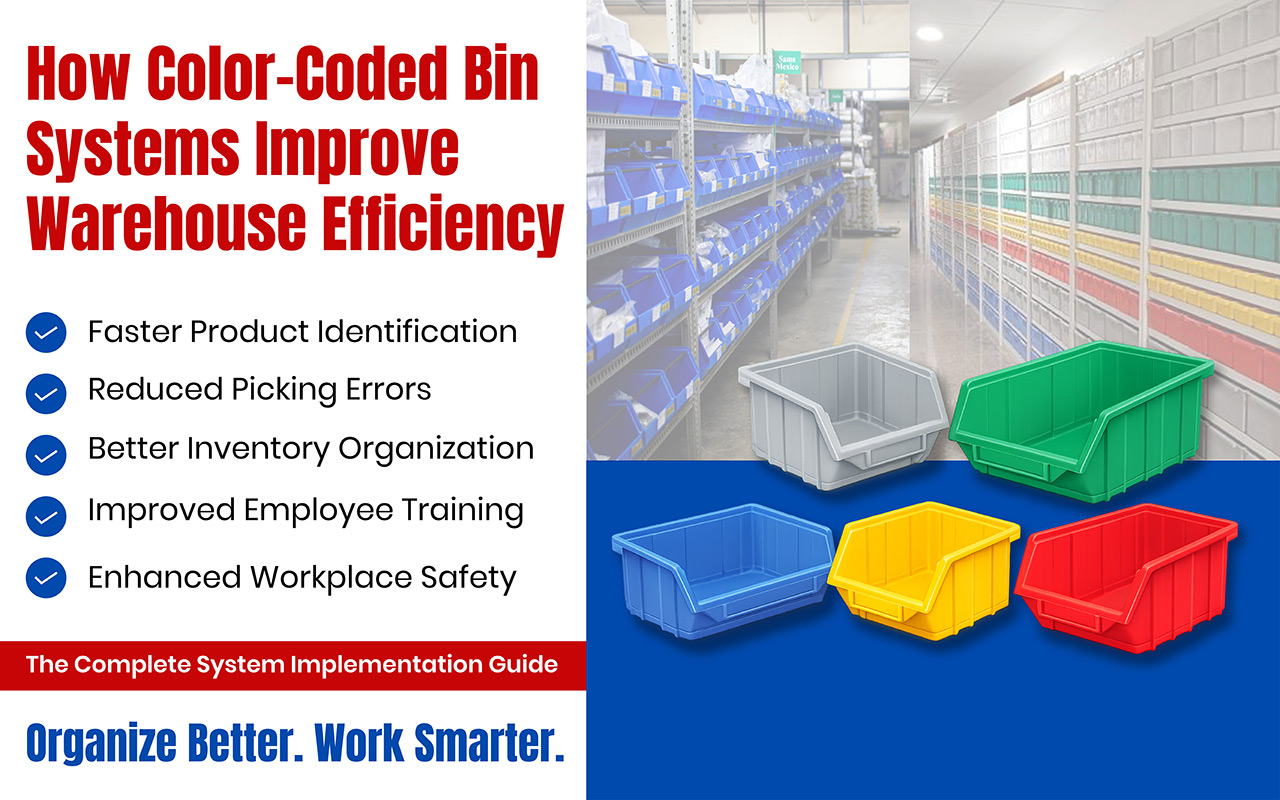
Color-coded storage bins create an instantly recognizable visual storage system that helps employees identify product categories, inventory locations, departments, and storage zones without relying solely on labels or barcode scanning.
Whether you're managing a warehouse, manufacturing facility, distribution center, automotive parts store, healthcare inventory room, or e-commerce fulfillment center, a structured color-coding system can significantly improve organization and productivity.
What Are Color-Coded Warehouse Bins?
Color-coded warehouse bins are storage containers assigned specific colors to represent different products, categories, departments, processes, inventory statuses, or storage locations.
Instead of relying only on text labels, workers can quickly identify items through visual recognition.
For example:
| Bin Color | Category |
| Blue | Raw Materials |
| Green | Finished Goods |
| Yellow | Fast-Moving Inventory |
| Red | Quality Hold / Rejected Stock |
| Grey | Maintenance Parts |
This visual identification system reduces search time and improves inventory accuracy.
Why Color Coding Matters In Warehousing
As inventory volumes grow, warehouses become more complex.
Without clear identification systems, facilities often experience:
- Picking errors
- Wrong inventory placement
- Delayed order processing
- Excessive searching
- Inventory confusion
- Training difficulties
- Stock handling mistakes
Color coding provides an immediate visual reference that simplifies warehouse operations.
Benefits Include:
✔ Faster inventory identification
✔ Reduced picking errors
✔ Improved workplace organization
✔ Better inventory visibility
✔ Faster employee training
✔ Increased productivity
✔ Enhanced warehouse safety
✔ Improved stock control
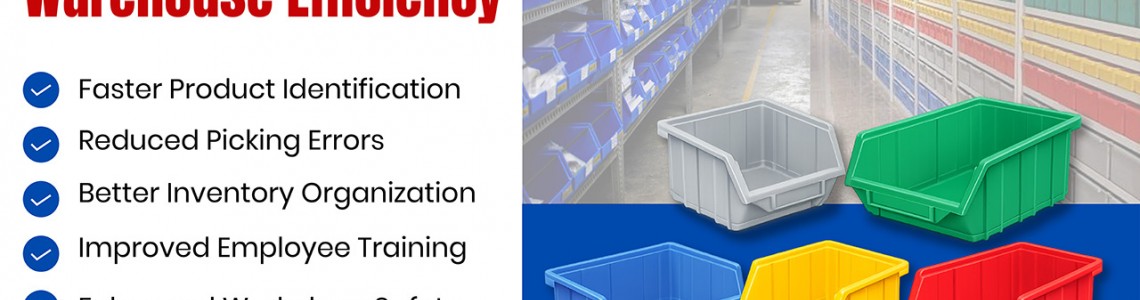
How Color-Coded Bin Systems Improve Warehouse Efficiency
1. Faster Product Identification
2. Reduced Picking Errors
3. Better Inventory Organization
4. Improved Employee Training
5. Enhanced Workplace Safety
Common Color-Coding Strategies
Strategy 1: Product Category Based
Strategy 2: Department Based
Strategy 3: Inventory Status Based
Strategy 4: Warehouse Zone Based
Steps To Implement A Color-Coded Warehouse Bin System
Step 1: Define Your ObjectivesIdentify the primary goal.
Examples:
- Reduce picking errors
- Improve inventory visibility
- Simplify training
- Increase storage efficiency
Group products according to:
- Product type
- Department
- Inventory status
- Movement frequency
Avoid creating too many categories.
Step 3: Assign ColorsSelect distinct colors that are easy to recognize.
Best Practice:
Use 5–8 colors maximum.
Too many colors can create confusion.
Step 4: Standardize Across The FacilityEnsure every department follows the same color system.
Consistency is critical for long-term success.
Step 5: Add Labels And SignageColor coding should support—not replace—labels.
Use:
- Bin labels
- Shelf labels
- Zone signage
- Barcode systems
This creates multiple layers of identification.
Step 6: Train EmployeesEducate staff on:
- Color meanings
- Storage procedures
- Inventory handling processes
Regular refresher training improves compliance.
Step 7: Monitor And ImproveTrack:
- Picking accuracy
- Search times
- Inventory errors
- Productivity levels
Adjust the system when operational requirements change.
Common Mistakes To Avoid
Using Too Many ColorsComplex systems become difficult to remember.
Inconsistent ImplementationDifferent departments using different rules create confusion.
Ignoring LabelsColors should complement labels, not replace them.
Poor Employee TrainingEven the best system fails without proper communication.
No Standard DocumentationCreate written guidelines for long-term consistency.
Industries That Benefit From Color-Coded Storage
Manufacturing- Components
- Work-in-progress inventory
- Production materials
- SKU identification
- Order fulfillment
- Storage zones
- Spare parts
- Fasteners
- Maintenance inventory
- Medical supplies
- Emergency inventory
- Departmental storage
- Component management
- Assembly operations
- Picking optimization
- SKU organization
- Faster dispatch
Why Choose Alkon Storage Solutions?
For more than 42 years, Alkon Plastics Pvt. Ltd. has helped industries improve storage efficiency through practical and durable storage systems.
Alkon offers:
✔ Plastic Storage Bins
✔ Shelf Bins
✔ Component Organisers
✔ Picking Bins
✔ Panda Shelving Systems
✔ Material Handling Solutions
✔ Reusable & Recyclable Products
✔ Government Recognized Export House
✔ Trusted Across Multiple Industries
Our storage solutions help businesses create organized, scalable, and visually efficient warehouse environments that support productivity and long-term growth.
Conclusion
A well-designed color-coded warehouse bin system is one of the most cost-effective ways to improve inventory organization, reduce errors, and increase operational efficiency.
By combining color-coded bins, clear labeling, structured shelving systems, and employee training, businesses can create a warehouse environment that is easier to manage, easier to scale, and significantly more productive.
As warehouses continue to handle larger inventories and faster fulfillment demands, visual organization systems like color coding will remain an essential part of efficient warehouse management.
Organize Better. Work Smarter.
Alkon Plastics Pvt. Ltd.